publications
publications by categories in reversed chronological order.
2026
-
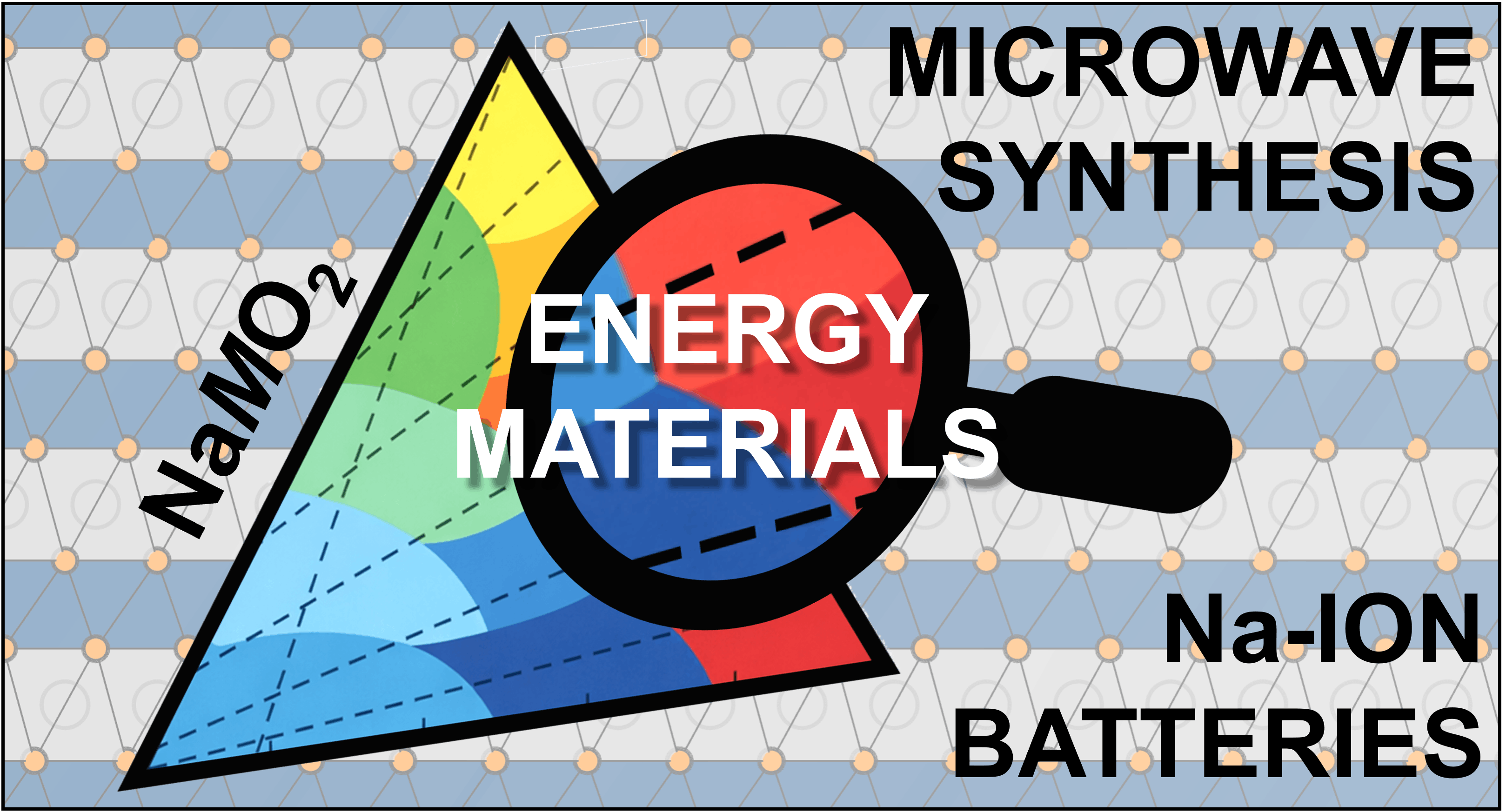 Na-Ion Cathodes in Minutes: Microwave Synthesis Across the Na--Mn--Fe--Ni--Cu--O Composition SpaceMA Wright, EC Moya, S Browne, AJ Bologna, KE Brockmeyer, AR Reach, and R SeshadriACS Appl. Energy Mater., 2026Accepted, in press
Layered Na$M$O$_2$ oxides are attractive cathode materials for Na-ion batteries due to their exceptional tunability of redox chemistry, voltage, and structural stability via transition-metal composition and layer ordering. Here, we demonstrate that microwave synthesis provides a rapid and efficient route to the preparation of Na$M$O$_2$ materials. Six oxide compositions in the Na--Mn--Fe--Ni--Cu--O phase space were synthesized on 7 min to 10 min timescales. Synchrotron X-ray diffraction, Raman spectroscopy, and electron microscopy confirm well-ordered layered frameworks composed of micrometer-scale particles. Compositional analysis using inductively coupled plasma optical emission spectroscopy and X-ray fluorescence shows that near-target stoichiometries are obtained without the excess sacrificial Na precursors typically required in conventional solid-state routes, consistent with suppressed Na volatilization during the short reaction. The rapid reaction thereby provides access to highly sodiated O3 phases that can be difficult to obtain under equilibrium conditions. The high mobility of Na$^+$, combined with the large size mismatch between Na and $M$, promotes the formation of well-ordered frameworks with no evidence of antisite disorder between Na and the transition metal ions. Electrochemical measurements reveal composition-dependent Na-ion (de)insertion behavior: Mn/Fe-rich compositions deliver high capacity but exhibit pronounced hysteresis, while Ni substitution increases operating potential and suppresses abrupt phase transitions. Dopant levels of Cu, previously reported to stabilize the structure, are readily incorporated and further smooth the potential profiles, albeit at the expense of capacity. These results demonstrate that microwave synthesis enables rapid and reliable access to O3--Na$M$O$_2$ phases, emphasizing its suitability as a platform for the rapid exploration of compositions.
- Covalently Integrated Amorphous Mn$_x$Mo$_3$S$_{13}$--GO Chalcocarbogel for High Capacity and Long-Life Sulfur Equivalent Conversion ElectrodesT Islam, S Bayat, K Pitton, MA Wright, MM Rahman, R Yin, S Clark, SC Roy, R Feng, R Chernikov, KM Wiaderek, LC Gallington, AM Abeykoon, C Risko, R Amin, BS Guiton, and MS IslamSmall, 2026Early access
Developing long-life, high-capacity sulfur-based electrodes from earth-abundant elements remains a major challenge because of structural degradation and polysulfide dissolution during multielectron conversion reactions. Here, we report a hybrid amorphous Mn$_x$Mo$_3$S$_{13}$--GO ($x$ = 0.5) chalcocarbogel synthesized by a room-temperature, acid-free sol--gel process. The resulting framework comprises chemically integrated $M$--S/O ($M$ = Mn, Mo) and C--S bonding motifs that form a mechanically and chemically robust electroactive network. Synchrotron X-ray PDF, XANES/EXAFS, XPS, Raman spectroscopy, magnetic susceptibility, and density functional theory (DFT)-based ab initio molecular dynamics reveal short-range Mo$_3$S$_{13}$-like clusters and MnS$_2$-like coordination environments within the amorphous framework. Mn incorporation shortens polysulfide chains and strengthens Lewis acid--base interactions with redox-active sulfur species, while graphene oxide enhances electronic connectivity and structural integrity through chemically coupled interfaces. As a lithium-ion battery cathode, the Mn$_x$Mo$_3$S$_{13}$--GO chalcocarbogel delivers a reversible capacity of $\sim$525 mAh g$^{-1}$ after 1000 cycles at C/3, corresponding to 83\% capacity retention with $>$99.99\% Coulombic efficiency. These findings establish Mo$_3$S$_{13}$ cluster-engineered chalcocarbogels as a versatile platform for durable amorphous sulfur-redox electrodes, where synergistic metal--sulfur and graphene oxide interactions at the atomic level enable long-term electrochemical stability and high-performance energy storage.
-
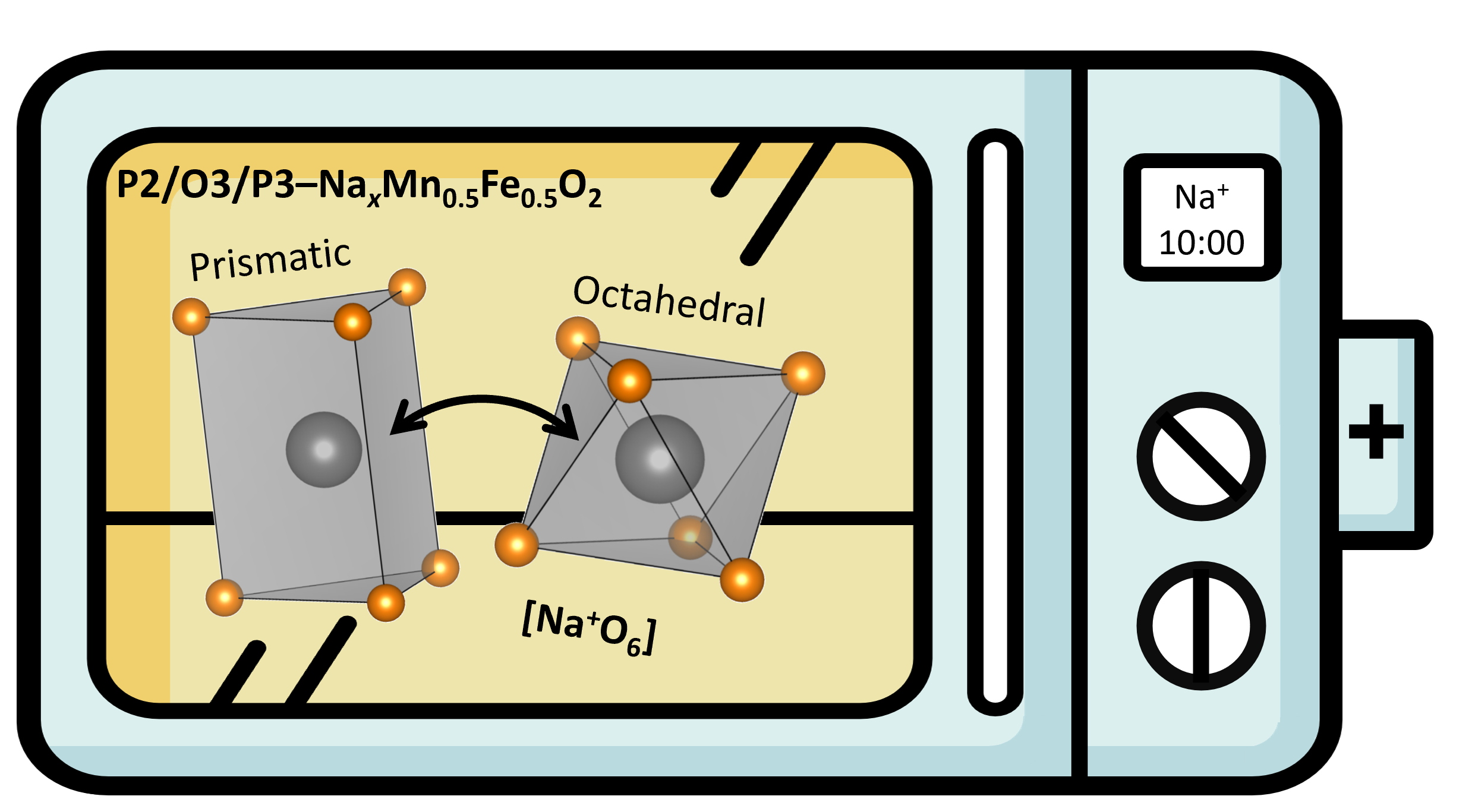 Rapid and Phase-Selective Routes to Layered Na-Ion CathodesMA Wright, S Browne, EC Moya, AR Reach, A Sebastian, A Abulajiang, R Yin, J Cesareo, J Li, A Tarin, SH Tolbert, BC Melot, A Ven, and R SeshadriChem. Mater., 2026Early access
Layered Na--Mn--Fe--O oxides are among the leading cathode candidates for Na-ion batteries owing to their low cost, earth-abundant constituents, and competitive electrochemical performance. Their rich structural chemistry, spanning O-type (octahedral Na) and P-type (prismatic Na) polymorphs with distinct stacking sequences, offers multiple avenues for property optimization. However, controllable access to specific polymorphs, particularly nonequilibrium ones, remains a synthetic challenge. Here we show that susceptor-assisted microwave heating can produce the P2, O3, and P3 phases of layered Na--Mn--Fe--O cathodes in minutes, with phase selectivity set by the nominal Na/$M$ ratio of the precursor alone. The rapid reaction times suppress Na volatilization, preserving the target stoichiometry without the excess sacrificial Na precursors typically required by conventional solid-state routes. The high mobility of Na$^+$, combined with the large size difference between Na and Mn/Fe, yields well-ordered frameworks with no evidence for antisite disorder between Na$^+$ and the transition metals. Accessing all three structures from one rapid route enables a controlled comparison of how stacking sequence governs electrochemistry. On cycling, we observe Fe$^{3+}$/Fe$^{4+}$ redox and behavior consistent with Fe$^{3+}$ migration into the Na layer at high voltage in all three polymorphs, with P2 showing the most stable high-voltage cycling. Operando diffraction shows that all three converge toward disordered O-type stacking on deep desodiation, and voltage-resolved distribution-of-relaxation-times analysis shows that Na$^+$ diffusion kinetics are governed by stacking transitions and Na--vacancy ordering, with pronounced kinetic barriers at glide-type structural transitions. These results establish microwave synthesis as a versatile route to both equilibrium and nonequilibrium layered Na cathodes and clarify how stacking sequence and local disorder jointly control redox behavior and ion transport.
-
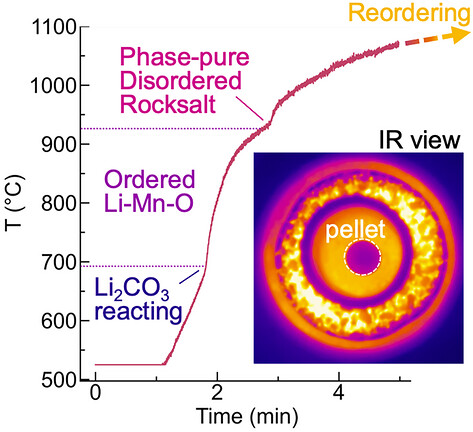 Monitoring the Microwave Synthesis of d$^0$-Free Disordered Rocksalt Cathodes Using In Situ Infrared PyrometryEA Lawrence, MA Wright, T Li, EN Bassey, V Kumar, P Cardon, S Yuan, PE Cabelguen, and RJ ClémentAngew. Chem. Int. Ed., 2026Early access
A detailed understanding of solid-state reaction pathways is essential for connecting predictive frameworks, such as density functional theory and machine learning, with experimental synthesis. Microwave synthesis has emerged as a powerful route for preparing inorganic materials, yet the mechanisms governing microwave-driven processes remain poorly understood, particularly for metastable compounds whose formation is highly sensitive to synthesis conditions. Disordered rocksalt oxides (DRX) are high-temperature metastable phases of interest as next-generation Li-ion cathodes. Here, we investigate the microwave reaction pathway of Li$_{1.1}$Mn$_{0.9}$O$_{1.9}$F$_{0.9}$. Combining ex situ phase identification using X-ray diffraction and solid-state NMR with in situ infrared thermography, we show that the reaction proceeds through a reentrant order--disorder--order transformation. Layered Li--Mn--O intermediates disorder above 945~$^{\circ}$C to form the DRX phase, while continued heating drives reordering back to layered structures. Infrared profiles reveal a distinct feature marking completion of the disordering transition, enabling precise reaction termination to maximize DRX phase purity. We further examine the impact of phase purity on the ``$\delta$-phase'' transition during electrochemical cycling and find that residual layered phases minimally affect performance. These findings indicate that Li$_{1.1}$Mn$_{0.9}$O$_{1.9}$F$_{0.9}$ is only stable near 945~$^{\circ}$C, yet its electrochemical performance tolerates synthesis-induced impurities.
-
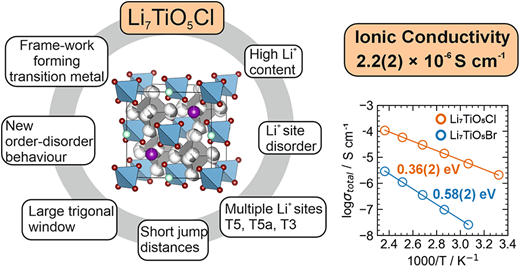 High Lithium Content and Site Disorder in the Transition Metal Oxide Argyrodites Li$_7$TiO$_5X$ ($X$ = Cl$^-$, Br$^-$)A Morscher, L Corti, SL Goodwin, MA Wright, TW Surta, MS Dyer, F Blanc, LM Daniels, JB Claridge, and MJ RosseinskyChem. Mater., 2026
Sulfide lithium argyrodites are a key materials family that are studied as solid electrolytes in commercial all-solid-state batteries (ASSBs), while their oxide analogues remain relatively unexplored. This study presents the discovery of Li$_7$TiO$_5X$ ($X$ = Cl$^-$, Br$^-$), the first lithium argyrodite materials in which a transition metal is used as the framework-forming cation, expanding the chemical space that is accessible for oxide argyrodites. Incorporation of Ti$^{4+}$ enables the lithium content to be maximized to 7 Li$^+$ per formula unit. Interestingly, even with the high lithium content, Li$_7$TiO$_5$Cl retains a Li$^+$ site disordered cubic $I\bar{4}3m$ structure at room temperature with Li$^+$ occupancy of the T5, T5a, and T3 positions, and exhibits an ionic conductivity of 2.2(2) $\times$ 10$^{-6}$ S cm$^{-1}$ with the lowest reported activation energy (0.36(2) eV) for bulk Li$^+$ ion transport in an oxide argyrodite. Conversely, Li$_7$TiO$_5$Br adopts the same $I\bar{4}3m$ symmetry at room temperature but with an ordered arrangement of Li$^+$ positions via full occupancy of the T5a and T3 positions, and thus has an ionic conductivity that is 3 orders of magnitude lower ($\sim$10$^{-9}$ S cm$^{-1}$) and a much higher activation energy (0.58(2) eV) than Li$_7$TiO$_5$Cl. Order--disorder behavior is observed below 250 K in Li$_7$TiO$_5$Cl, where a Li$^+$ site ordering pattern is observed that is distinct from Li$_7$TiO$_5$Br and all sulfide argyrodites, yielding a tetragonal symmetry ($I\bar{4}$) for only the second time to date in the argyrodite structure type. This unique order--disorder behavior, alongside the ability to incorporate transition metal cations within this material family emphasizes the potential to access much greater structural diversity via the expansive chemical space that is available for exploration in oxide argyrodites.
-
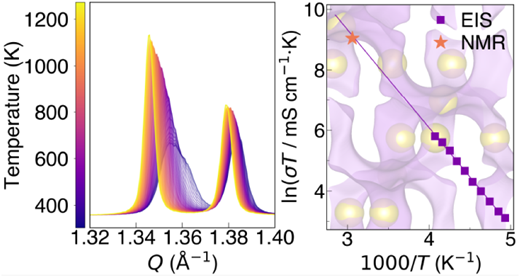 Enhanced Sodium Dynamics in Biphasic NaSICON Solid ElectrolytesA Reach, MA Wright, AS Mulligan, Z Fang, KT Tseng, C Wang, JG Hu, M Chi, AK Cheetham, R Seshadri, and J SakamotoChem. Mater., 2026
NaSICONs, or sodium superionic conductors, are promising solid electrolyte materials for Na-based all-solid-state and aqueous redox-flow battery applications. Here, the composition Na$_{3.4}$Zr$_2$Si$_{2.4}$P$_{0.6}$O$_{12}$ has been prepared through solution-assisted microwave processing and densification through rapid induction hot pressing. The samples display remarkably high total ionic conductivities between 7 and 9 mS cm$^{-1}$, competitive with liquid electrolytes. A combination of synchrotron X-ray and neutron diffraction, electrochemical impedance spectroscopy, and variable-temperature solid-state nuclear magnetic resonance studies reveals rapid Na-ion transport through the rigid skeletal framework of this solid ion conductor. Variable-temperature synchrotron X-ray diffraction reveals structural phase separation in this composition on cooling at temperatures close to 430 K with the samples at room temperature displaying a mix of monoclinic $C2/c$ and rhombohedral $R\bar{3}c$ components that appear to collectively contribute to the high conductivity. The observation of very high ionic conductivity in a region of compositional space that is associated with structural instability is proposed as a design principle for superionic conduction.
-
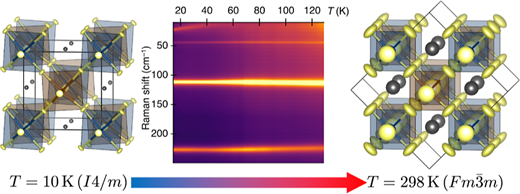 Structural Properties in Cs$_2M$Bi$X_6$ ($M$ = Na, Ag; $X$ = Cl, Br) Bismuth Halide Double PerovskitesH Tian, T Li, AS Mulligan, J Tregidga, MA Wright, A Zohar, A Chezhiyan, MB Preefer, KH Stone, J Hu, G Wu, AM Manjón-Sanz, SH Lapidus, JW Harter, AK Cheetham, and R SeshadriChem. Mater., 2026
A previously unreported low-temperature phase transition in bismuth halide double perovskite Cs$_2$AgBiCl$_6$ is reported, thereby establishing trends in the structural ground states across Cs$_2$NaBiCl$_6$, Cs$_2$AgBiCl$_6$, and Cs$_2$AgBiBr$_6$. Using the combined toolkit of variable-temperature synchrotron X-ray and neutron powder diffraction, Raman spectroscopy, and density-functional theory-based electronic structure modeling, we demonstrate a cubic $\rightarrow$ tetragonal $I4/m$ transition upon cooling with distinct onset temperatures. Neutron powder diffraction refinements and DFT calculations assign the low-temperature phase of Cs$_2$NaBiCl$_6$ to $I4/m$, rather than the previously reported $I4/mmm$ ground state. Cs$_2$AgBiCl$_6$ is also found to transform to a structure crystallizing in the $I4/m$ space group at low temperatures. Temperature-dependent Raman data and density-functional-theory-based modeling capture the softening and freezing of octahedral tilt modes and quantify relative instabilities. Solid-state nuclear magnetic resonance spectroscopy at room temperature completes the characterization and helps underpin the subtle differences in the covalency across the compounds. Trends in the phase transition temperature $T_{\rm s}$ and tilt magnitudes emerge from coupled effects of halide identity, $M$(I)--site bonding character, and a mismatch between interatomic distances. These results establish the structure--dynamics--bonding framework for tuning tilt-driven instabilities in halide double perovskites.
-
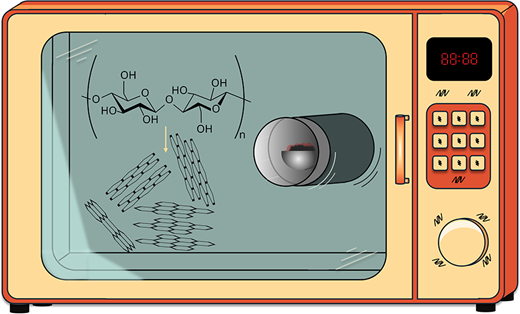 Direct Microwave Pyrolysis of Cellulose to Hard Carbon Anodes for Sodium-Ion BatteriesKE Brockmeyer, AJ Bologna, MA Wright, J Wong, C Rodriguez, T Li, RA Segalman, and R SeshadriChem. Mater., 2026
Hard carbons are the leading anode material in Na-ion batteries due to their considerable ability to store Na, and the ease with which they can be produced from inexpensive precursors such as cellulose through pyrolysis in inert atmospheres. Here, we report a rapid one-step conversion of cellulose to hard carbons in under 15 min in a modified domestic microwave oven. This is in contrast to more conventional furnace-based pyrolysis which can take several hours. From optical pyrometry, we find that under different microwave power conditions, the hard carbons can be tunably formed at temperatures between 900 to 1250~$^{\circ}$C under the conditions employed. The hard carbons produced here have been characterized by Raman spectroscopy, wide and small-angle X-ray diffraction, porosimetry, X-ray photoelectron spectroscopy, and X-ray pair distribution function analysis. As a function of increasing microwave power, the carbons are found to exhibit comparable local structure but enhanced crystallinity and evidence of an increased proportion of closed pores. The formation of closed pores appears to directly contribute to significant gains in Na storage capacity throughout the plateau region during electrochemical cycling. These results demonstrate a convenient and scalable strategy for rapidly producing hard carbons with tunable porosity.
2025
-
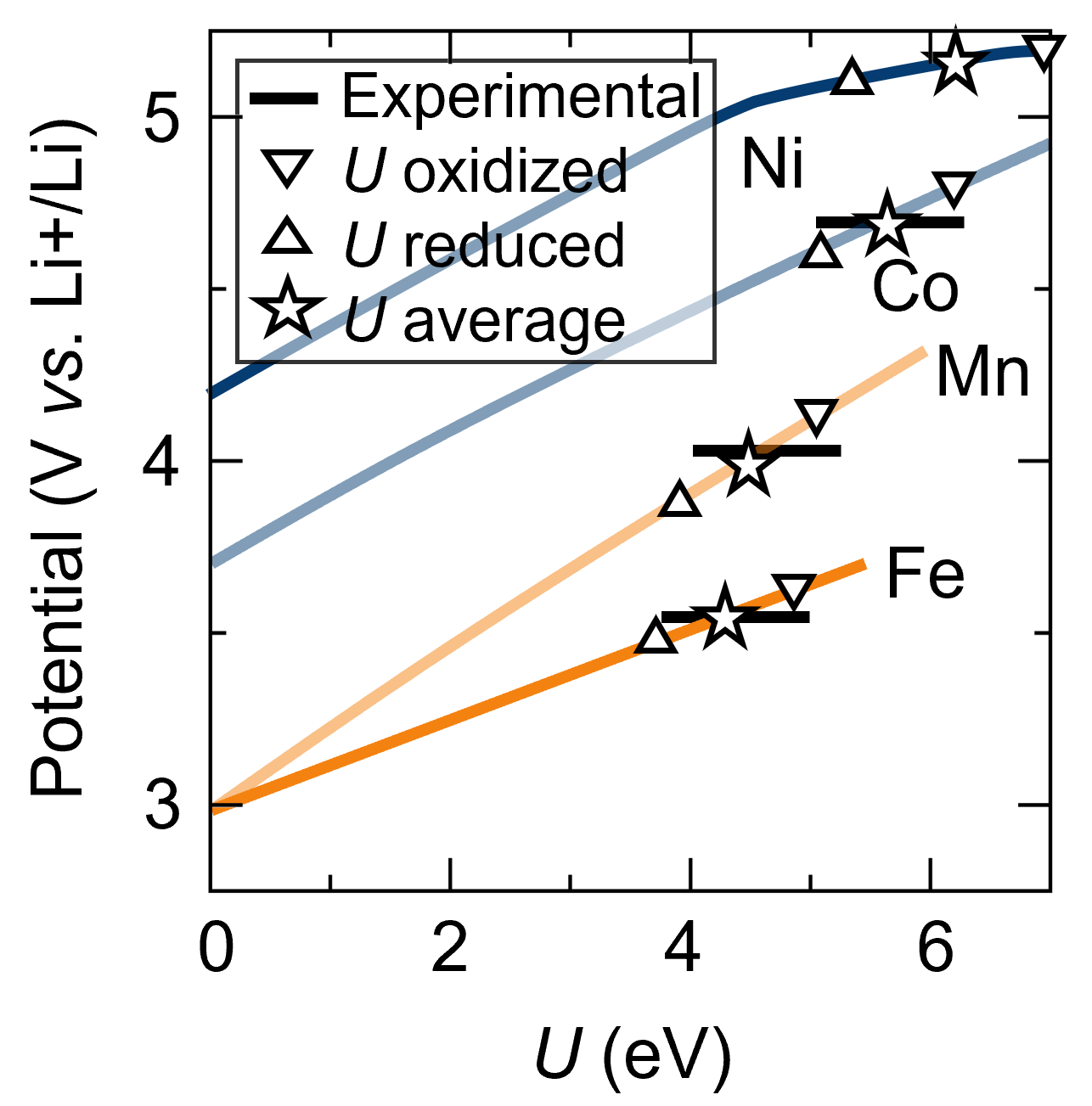 Linking Battery Electrode Science with Correlated and Quantum MaterialsMA Wright and R SeshadriPhys. Rev. Mater., 2025
While redox activity in electrode materials is well studied in the context of energy storage, its connection to magnetic and electronic phenomena is perhaps not as widely appreciated. Electrochemistry can be leveraged to provide dynamic control over emergent electronic and magnetic behavior in solid materials. In this perspective we review how alkali-ion (de)insertion has been utilized to alter spin states, induce charge ordering, and drive transitions between insulating, metallic, and magnetically frustrated phases for a range of battery materials, including layered LiCoO$_2$ and LiNiO$_2$, olivine-LiFePO$_4$, and spinel LiMn$_2$O$_4$. We also describe less conventional systems like Wadsley--Roth shear phases and breathing-kagome networks to showcase the broader potential for quantum control via redox chemistry. The evolution of emergent properties like spin frustration, Jahn--Teller distortions, and electron localization/delocalization is related to ion content and crystallographic structure. We conclude that electrochemistry can provide a powerful platform for exploring and manipulating physical phenomena in correlated and quantum materials and discuss some experimental challenges.
-
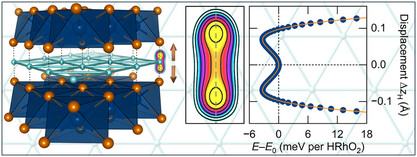 Strong, Yet Split Hydrogen Bonding with Ice Rules in Delafossite (H/D)RhO$_2$MA Wright, AS Mulligan, D Rout, JG Hu, RL Behrens, JR Chamorro, SD Wilson, AK Cheetham, and R SeshadriAngew. Chem. Int. Ed., 2025
Despite remaining enigmatic, strong hydrogen bonding provides an advanced design handle for tailoring the properties of functional materials. Here, 3$R$--(H/D)RhO$_2$ delafossites (prepared by ion exchange of Na$^+$ from NaRhO$_2$) contain H/D in linear coordination with O, linking Rh$^{\rm III}$O$_2$ layers. Bragg and real-space X-ray and neutron scattering analysis, vibrational and solid-state NMR spectroscopy, and density functional theory (DFT)--based electronic structure calculations have been employed to understand the nature of the hydrogen bonding. Despite short distances between H/D and the two O to which they are bonded, a clear double-minimum corresponding to a shorter and longer (H/D)--O distance is established. The triangular lattices formed by H/D appear to display ice-like disorder, corroborated by low-temperature heat capacity measurements.
-
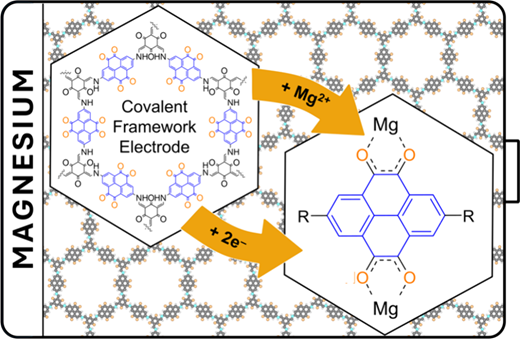 Revealing the Mg-Ion Storage Mechanism Within a Covalent Organic Framework ElectrodeMA Wright, AR Neale, AA Lalanza, H Gao, MJ Rosseinsky, AI Cooper, and LJ HardwickACS Appl. Energy Mater., 2025
Magnesium batteries offer a promising alternative to lithium-ion systems, but suitable electrodes remain limited. Covalent organic frameworks (COFs) are attractive candidates due to their structural tunability and open channels for ion transport. We report a pyrene-4,5,9,10-tetraone COF composite with carbon nanotubes as a Mg electrode, delivering 70 mAh g$^{-1}$ at 200 mA g$^{-1}$ and operating at 1.3 V. In situ Raman spectroscopy confirms carbonyl-centered redox on pyrene tetraone, supporting a Mg$^{2+}$-driven carbonyl reduction. Compared with Li$^+$, only partial carbonyl utilization occurs, attributed to steric and electrostatic constraints of divalent Mg$^{2+}$. This incomplete conversion to magnesium-enolate inspires future work toward structural optimization.
-
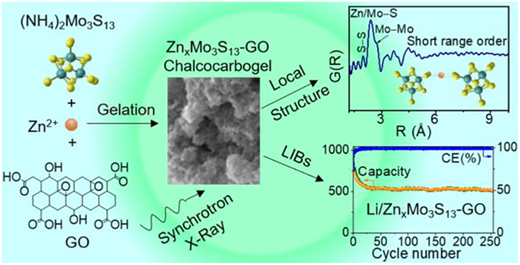 Semiconducting Zn$_x$Mo$_3$S$_{13}$-GO Chalcocarbogel: A High-Capacity and Stable Sulfur-Equivalent Conversion-Based Electrode for Lithium-Ion BatteriesMA Weret, T Islam, S Bayat, SC Roy, C Sawicki, P Powe, CL Donley, AS Kumbar, AM Abeykoon, R Chernikov, RM Curtis, MA Wright, KM Wiaderek, C Risko, R Amin, and SM IslamChem. Mater., 2025
Lithium--sulfur batteries with a sulfur electrode offer a theoretical capacity of $\sim$1672 mAh g$^{-1}$, but rapid capacity loss mainly constrains their practical application. This work introduces a semiconducting and amorphous Zn$_x$Mo$_3$S$_{13}$-GO ($x$ = 0.5) chalcocarbogel sulfur-equivalent electrode with superior capacity and stability for lithium-ion batteries (LIBs). The Zn$_x$Mo$_3$S$_{13}$-GO is synthesized in solution under ambient conditions, and its local structure contains S--S, $M$--$Q$ ($M$ = Mo, Zn; $Q$ = S, O), C--S, and Mo--Mo bonding motifs with Mo coordination environment closely related to Mo$_3$S$_{13}$ anions, as determined by X-ray photoelectron spectroscopy, synchrotron X-ray scattering, X-ray absorption spectroscopy, and ab initio molecular dynamics simulations. The Li/Zn$_x$Mo$_3$S$_{13}$-GO cell offers an initial discharge capacity of 1019 mAh g$^{-1}$ at a rate of C/3. After the activation cycles, the Li/Zn$_x$Mo$_3$S$_{13}$-GO cell demonstrates good cycling stability, retaining a discharge capacity of 519.4 mAh g$^{-1}$ after 250 cycles with $\sim$99.98\% Coulombic efficiency and excellent rate capabilities. Moreover, it provides an initial discharge capacity of $\sim$574 mAh g$^{-1}$ and maintains a retention capacity of 279 mAh g$^{-1}$ at 1C after 625 cycles. The Lewis acidic Zn$^{2+}$ ion enhances the Lewis basic polysulfide anchoring ability and reduces the dissolution of polysulfides produced during the redox process through Zn--S covalent interaction, while the semiconducting and amorphous structure of the chalcocarbogel increases the electrical and ionic conductivity. This work highlights chalcocarbogels' potential for developing high-capacity and stable electrodes for LIBs.
-
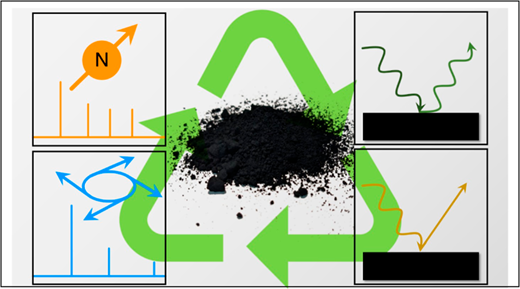 Pyrolyzed Black Mass Feedstocks and Their Synthetic Proxies Relevant to Li-Ion Battery RecyclingAJ Bologna, RC Vincent, A Kallistova, JA Mayer, MA Wright, CR Dela Cruz, R Zhang, F Seeler, K Schierle-Arndt, and R SeshadriACS Omega, 2025
Lithium-ion battery (LIB) recycling aims to recover valuable materials present within end-of-life electrochemical cells. Industrial recycling processes produce ``black mass'' from recycling feedstock from which desirable materials can be recollected. Spent cells first undergo mechanical shredding and sieving, and organic components are removed by thermal treatment (pyrolysis) before hydrometallurgical processing is employed to recover the constituent elements. Black mass may contain a range of reaction products, formed at high temperature during pyrolysis, due to the compositionally complex and inhomogeneous nature of recycling feedstock. These products, however, may have different elemental compositions, ratios, and structures, making efficient hydrometallurgical recovery difficult. Here, we present three distinct, industrially sourced black mass samples containing Li(Ni$_x$Mn$_y$Co$_z$)O$_2$ ($x + y + z$ = 1) positive electrodes of varying composition. We employ a suite of structural and compositional characterization techniques, including synchrotron X-ray and neutron powder diffraction and element specific analysis (X-ray photoelectron spectroscopy, X-ray fluorescence spectroscopy, energy dispersive X-ray spectroscopy, inductively coupled plasma optical emission spectroscopy), to identify phases formed during commercial treatment of recycling feedstocks and how their relative quantities are affected by process order. Additionally, we also present results of studies on simpler model systems to better identify minor phases present within the complex recycling feedstocks and to direct the efficient recovery of valuable components.
-
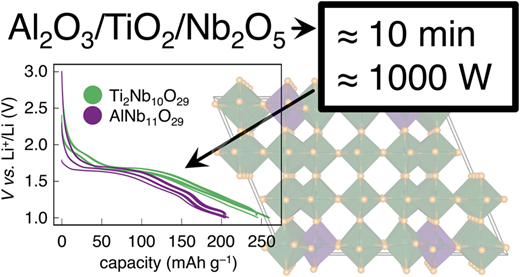 Rapid Microwave Preparation of AlNb$_{11}$O$_{29}$ and Ti$_2$Nb$_{10}$O$_{29}$ Wadsley--Roth Lithium-Ion Anode Compounds from Parent OxidesAR Reach, A Zohar, MA Wright, T Li, and R SeshadriACS Appl. Energy Mater., 2025
Niobium-based Wadsley--Roth oxides have recently attracted attention as promising anode materials for lithium-ion batteries, providing high charging and discharging rates and cycling stability. The higher operating potential of Wadsley--Roth oxide anodes, while impacting the overall energy density, reduces the risk of dendrite formation, making them safer at high power densities. We present the rapid preparation of two Wadsley--Roth oxide compounds, AlNb$_{11}$O$_{29}$ and Ti$_2$Nb$_{10}$O$_{29}$, by a microwave-assisted preparation method in under 10 min starting from oxide materials, and heating in open crucibles. No further processing is required to make effective electrode materials from these compounds other than grinding with the usual conducting carbon and binder. High-resolution synchrotron X-ray diffraction and scanning electron microscopy are employed to understand the impact of rapid preparation on the structure and morphology. Excellent electrochemical performance is achieved, with reversible capacities of up to 250 mAh g$^{-1}$ with high capacity retention over 100 cycles and fast-charging rates up to 10C without much loss of capacity. The materials reported here are compared to reports from the literature. Despite the very similar structures and compositions, AlNb$_{11}$O$_{29}$ is found to be less effective as an anode material than Ti$_2$Nb$_{10}$O$_{29}$, and in this work, we delve into possible reasons for this.
-
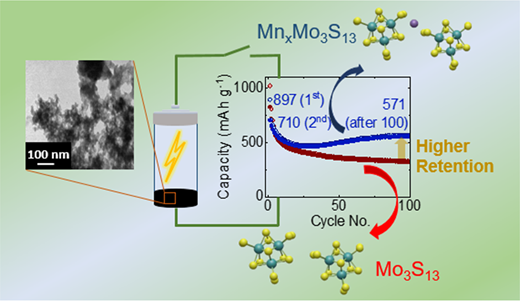 Porous Amorphous Mn$_x$Mo$_3$S$_{13}$ Chalcogel Electrode for High-Capacity Conversion-Based Lithium-Ion BatteriesT Islam, S Bayat, MA Wright, SC Roy, C Sawicki, CL Donley, AS Kumbar, R Chernikov, MA Weret, KM Wiaderek, C Risko, R Amin, and S IslamJ. Am. Chem. Soc., 2025
While Li-ion batteries (LIBs) are a leading energy storage technology, their energy densities are limited by the low capacity of conventional intercalation cathodes, driving interest in high energy-density Li--S batteries that make use of conversion chemistry. Achieving high capacity, reversibility, and cycle stability, and controlling volume changes in conversion batteries during the charge--discharge process, however, remains challenging. Here, we present a porous, amorphous, sulfide-based Mn$_x$Mo$_3$S$_{13}$ chalcogel, which concurrently offers high capacity and cycle stability. The solution-processable room temperature synthesized Mn$_x$Mo$_3$S$_{13}$ ($x$ = 0.25) chalcogel exhibits a local structure that resembles the Mo$_3$S$_{13}$ cluster with Mn$^{2+}$ distributed across the Mo$_3$S$_{13}$ matrix, as determined by synchrotron X-ray pair distribution function (PDF) and extended X-ray absorption fine structure (EXAFS). Ab initio molecular dynamics (AIMD) simulations reveal that Mn$^{2+}$ incorporation shortens the polysulfide chain in the gel matrix compared to the Mo$_3$S$_{13}$ chalcogel, while forming a coordination environment with disulfide groups, analogous to the experimental findings. A Li/Mn$_{0.25}$Mo$_3$S$_{13}$ half-cell delivers 897 mAh g$^{-1}$ capacity during the first discharge and retains 571 mAh g$^{-1}$ capacity after 100 cycles at a C/3 rate. Distribution of relaxation time (DRT) unveils a stable solid--electrolyte interphase (SEI) formation upon cycling that enables charge--discharge reversibility. Here, the enhanced capacity retention and cycle stability compared to those of the Li/Mo$_3$S$_{13}$ cell are attributed to the reduced dissolution of active mass into the electrolyte, facilitated by the formation of shorter polysulfide chains within the Mn$_{0.25}$Mo$_3$S$_{13}$ structure and the strong affinity of Lewis-acidic Mn$^{2+}$ for polysulfide anions generated during the charge--discharge process of the Li/Mn$_{0.25}$Mo$_3$S$_{13}$ cell. Thus, this work illustrates a design principle of material for high-capacity and cycle-stable Li-metal sulfide batteries.
2024
-
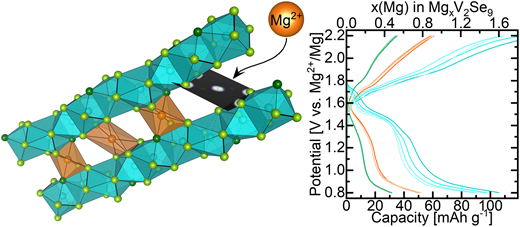 Fast Mg-Ion Insertion Kinetics in V$_2$Se$_9$MA Wright, J Lim, RA Pacheco, AE Krowitz, CJ Hawkins, M Bahri, LM Daniels, R Chen, LG Chagas, J Cookson, P Collier, AV Chadwick, ND Browning, JB Claridge, LJ Hardwick, and MJ RosseinskyJ. Mater. Chem. A, 2024
V$_2$Se$_9$ displays facile electrochemical insertion of up to 1.6 Mg$^{2+}$ per unit formula with fast diffusion (coefficients of 10$^{-10}$--10$^{-12}$ cm$^2$ s$^{-1}$) surpassing best-in-class materials like Mo$_6$S$_8$. Detailed structural characterization of synchrotron X-ray diffraction data with ab initio Maximum Entropy Method analysis reveals Mg$^{2+}$ insertion into octahedral sites within the large vdW space between [V$_4$Se$_{18}$]$_\infty$ chains. Fast rate performance is attributed to low structural perturbation and low diffusion barriers, calculated by bond valence pathway analysis, resulting from the low charge-per-size of anionic selenium. X-ray photoelectron spectroscopy and X-ray absorption spectroscopy reveal that reversible insertion of Mg$^{2+}$ is facilitated by V$^{5+}$/V$^{3+}$ redox. V$_2$Se$_9$ demonstrates that selenides, despite their larger molecular weight, offer potential as fast-rate positive electrode materials for magnesium batteries over well-explored oxides and sulfides.
-
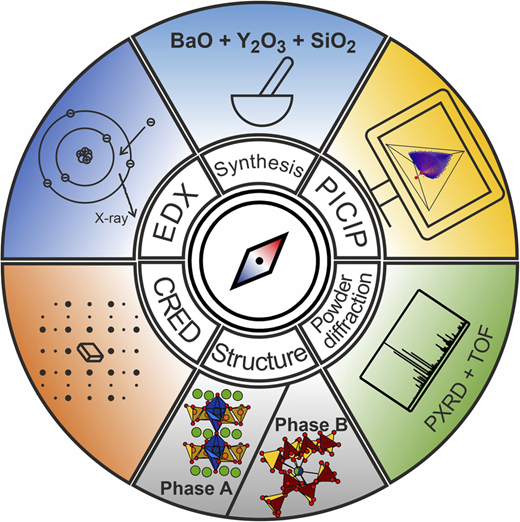 Navigation Through High-Dimensional Chemical Space: Discovery of Ba$_5$Y$_{13}$[SiO$_4$]$_8$O$_{8.5}$ and Ba$_3$Y$_2$[Si$_2$O$_7$]$_2$N Hulai, M Zanella, C Robertson, D Ritchie, M Sonni, MA Wright, JA Newnham, CJ Hawkins, J Whitworth, B Mali, H Niu, M Dyer, CM Collins, LM Daniels, JB Claridge, and MJ RosseinskyChem. Sci., 2024
Two compounds were discovered in the well-studied BaO--Y$_2$O$_3$--SiO$_2$ phase field. Two different experimental routines were used for the exploration of this system due to the differences of synthetic conditions and competition with a glass field. The first phase Ba$_5$Y$_{13}$[SiO$_4$]$_8$O$_{8.5}$ was isolated through a combination of energy dispersive X-ray spectroscopy analysis and diffraction techniques which guided the exploration. The second phase Ba$_3$Y$_2$[Si$_2$O$_7$]$_2$ was located using iterative algorithmic identification of target compositions. The structure solution of the new compounds was aided by continuous rotation electron diffraction, and the structures were refined against combined synchrotron and neutron time-of-flight powder diffraction. Ba$_5$Y$_{13}$[SiO$_4$]$_8$O$_{8.5}$ crystallizes in $I\bar{4}2m$, $a$ = 18.92732(1), $c$ = 5.357307(6) {\AA} and represents its own structure type which combines elements of structures of known silicates embedded in columns of interconnected yttrium-centred polyhedra characteristic of high-pressure phases. Ba$_3$Y$_2$[Si$_2$O$_7$]$_2$ has $P2_1$ symmetry with a pseudo-tetragonal cell ($a$ = 16.47640(4), $b$ = 9.04150(5), $c$ = 9.04114(7) {\AA}, $\beta$ = 90.0122(9)$^{\circ}$) and is a direct superstructure of the Ca$_3$BaBi[P$_2$O$_7$]$_2$ structure. Despite the lower symmetry, the structure of Ba$_3$Y$_2$[Si$_2$O$_7$]$_2$ retains disorder in both Ba/Y sites and disilicate network, thus presenting a superposition of possible locally-ordered fragments. Ba$_5$Y$_{13}$[SiO$_4$]$_8$O$_{8.5}$ has low thermal conductivity of 1.04(5) W m$^{-1}$ K$^{-1}$ at room temperature. The two discovered phases provide a rich structural platform for further functional material design. The interplay of automated unknown phase composition identification with multiple diffraction methods offers acceleration of the time-consuming exploration of high-dimensional chemical spaces for new structures.
-
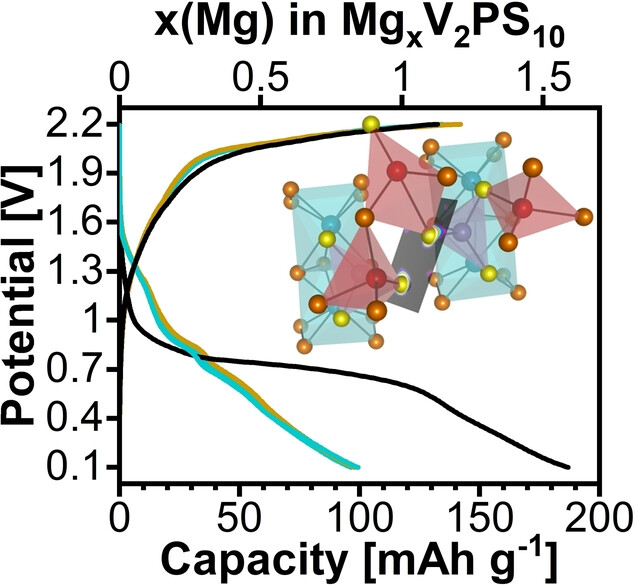 Accessing Mg-Ion Storage in V$_2$PS$_{10}$ via Combined Cationic--Anionic Redox with Selective Bond CleavageMA Wright, TW Surta, JA Evans, J Lim, H Jo, CJ Hawkins, M Bahri, LM Daniels, R Chen, M Zanella, LG Chagas, J Cookson, P Collier, G Cibin, AV Chadwick, MS Dyer, ND Browning, JB Claridge, LJ Hardwick, and MJ RosseinskyAngew. Chem. Int. Ed., 2024
Magnesium batteries attract interest as alternative energy-storage devices because of elemental abundance and potential for high energy density. Development is limited by the absence of suitable cathodes, associated with poor diffusion kinetics resulting from strong interactions between Mg$^{2+}$ and the host structure. V$_2$PS$_{10}$ is reported as a positive electrode material for rechargeable magnesium batteries. Cyclable capacity of 100 mAh g$^{-1}$ is achieved with fast Mg$^{2+}$ diffusion of 7.2 $\times$ 10$^{-11}$--4 $\times$ 10$^{-14}$ cm$^2$ s$^{-1}$. The fast insertion mechanism results from combined cationic redox on the V site and anionic redox on the (S$_2$)$^{2-}$ site; enabled by reversible cleavage of S--S bonds, identified by X-ray photoelectron and X-ray absorption spectroscopy. Detailed structural characterisation with maximum entropy method analysis, supported by density functional theory and projected density of states analysis, reveals that the sulphur species involved in anion redox are not connected to the transition metal centres, spatially separating the two redox processes. This facilitates fast and reversible Mg insertion in which the nature of the redox process depends on the cation insertion site, creating a synergy between the occupancy of specific Mg sites and the location of the electrons transferred.
2023
-
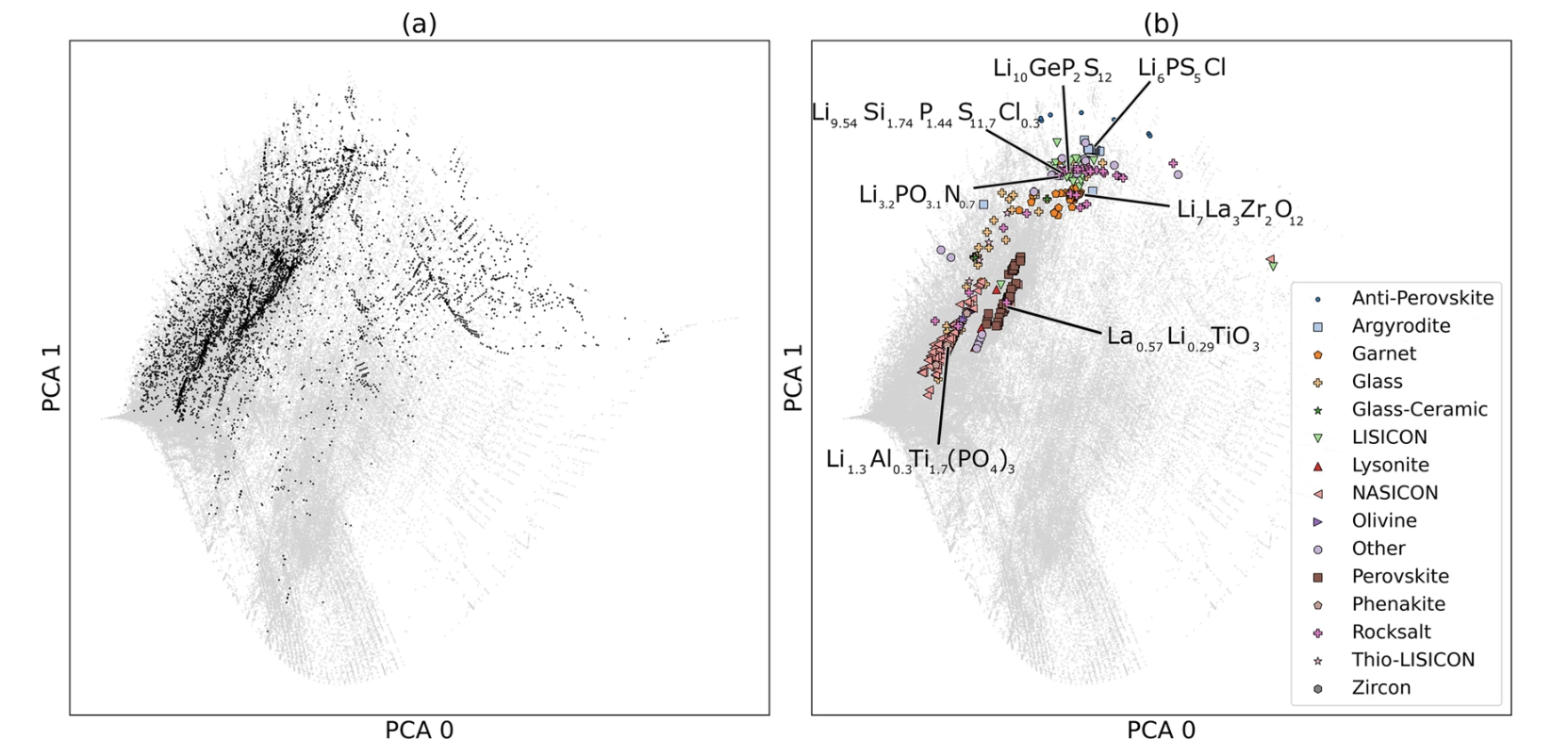 A Database of Experimentally Measured Lithium Solid Electrolyte Conductivities Evaluated with Machine LearningCJ Hargreaves, MG Gaultois, LM Daniels, EJ Watts, VA Kurlin, M Moran, Y Dung, R Morris, A Morscher, K Thompson, MA Wright, BE Prasad, F Blanc, CM Collins, CA Crawford, BB Duff, J Evans, J Gamon, G Han, BT Leube, H Niu, AJ Perez, A Robinson, O Rogan, PM Sharp, E Shoko, M Sonni, WJ Thomas, A Vasylenko, L Wang, MJ Rosseinsky, and MS Dyernpj Comput. Mater., 2023
The application of machine learning models to predict material properties is determined by the availability of high-quality data. We present an expert-curated dataset of lithium ion conductors and associated lithium ion conductivities measured by a.c. impedance spectroscopy. This dataset has 820 entries collected from 214 sources; entries contain a chemical composition, an expert-assigned structural label, and ionic conductivity at a specific temperature (from 5 to 873~$^{\circ}$C). There are 403 unique chemical compositions with an associated ionic conductivity near room temperature (15--35~$^{\circ}$C). The materials contained in this dataset are placed in the context of compounds reported in the Inorganic Crystal Structure Database with unsupervised machine learning and the Element Movers Distance. This dataset is used to train a CrabNet-based classifier to estimate whether a chemical composition has high or low ionic conductivity. This classifier is a practical tool to aid experimentalists in prioritizing candidates for further investigation as lithium ion conductors.
2021
-
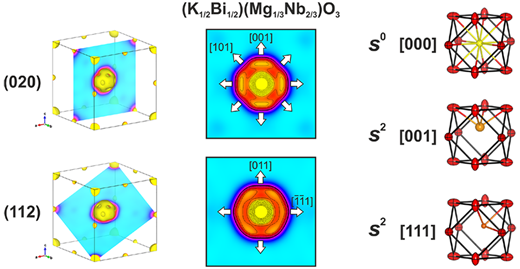 One Site, Two Cations, Three Environments: s$^2$ and s$^0$ Electronic Configurations Generate Pb-Free Relaxor Behaviour in a Perovskite OxideTW Surta, TA Whittle, MA Wright, H Niu, J Gamon, QD Gibson, LM Daniels, WJ Thomas, M Zanella, PM Shepley, Y Li, A Goetzee-Barral, AJ Bell, J Alaria, JB Claridge, and MJ RosseinskyJ. Am. Chem. Soc., 2021
The piezoelectric devices widespread in society use noncentrosymmetric Pb-based oxides because of their outstanding functional properties. The highest figures of merit reported are for perovskites based on the parent Pb(Mg$_{1/3}$Nb$_{2/3}$)O$_3$ (PMN), which is a relaxor: a centrosymmetric material with local symmetry breaking that enables functional properties, which resemble those of a noncentrosymmetric material. We present the Pb-free relaxor (K$_{1/2}$Bi$_{1/2}$)(Mg$_{1/3}$Nb$_{2/3}$)O$_3$ (KBMN), where the thermal and (di)electric behavior emerges from the discrete structural roles of the s$^0$ K$^+$ and s$^2$ Bi$^{3+}$ cations occupying the same $A$ site in the perovskite structure, as revealed by diffraction methods. This opens a distinctive route to Pb-free piezoelectrics based on relaxor parents, which we demonstrate in a solid solution of KBMN with the Pb-free ferroelectric (K$_{1/2}$Bi$_{1/2}$)TiO$_3$, where the structure and function evolve together, revealing a morphotropic phase boundary, as seen in PMN-derived systems. The detailed multiple-length-scale understanding of the functional behavior of KBMN suggests that precise chemical manipulation of the more diverse local displacements in the Pb-free relaxor will enhance performance.